Cloud AI vs Traditional Cloud: Understanding the Future of Smart Computing
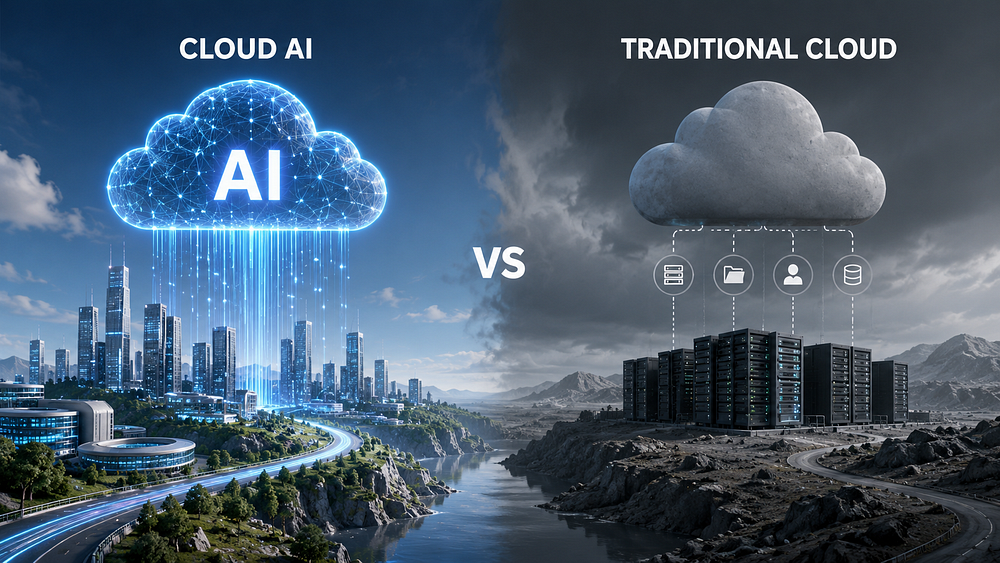
The world of technology is rapidly evolving, and businesses are constantly looking for smarter and faster ways to manage operations, improve efficiency, and deliver better customer experiences. Cloud computing has already transformed how companies store data and run applications, but now a new evolution is changing the industry — Cloud AI.
While Traditional Cloud focuses mainly on infrastructure, storage, and computing resources, Cloud AI introduces intelligence, automation, and predictive capabilities into cloud systems. Businesses across industries are now adopting AI-powered cloud solutions to stay competitive in a data-driven digital world.
If you want a detailed technical comparison, you can also read this complete guide from Sarbajira Software
What is Traditional Cloud?
Traditional Cloud refers to cloud computing services that provide online storage, servers, networking, and computing power through the internet. Instead of investing in expensive physical infrastructure, businesses can use cloud platforms to host applications and manage digital operations remotely.
Traditional cloud services mainly focus on:
- Data storage
- Application hosting
- Backup and recovery
- Server management
- Remote accessibility
- Scalability
Popular cloud platforms such as Amazon Web Services, Microsoft Azure, and Google Cloud have made cloud computing accessible for businesses of all sizes.
Traditional Cloud has helped organizations reduce hardware costs, improve flexibility, and scale operations efficiently. However, these systems still rely heavily on manual processes and human-driven decision-making.
What is Cloud AI?
Cloud AI combines artificial intelligence technologies with cloud computing infrastructure. Instead of simply storing and processing data, Cloud AI systems can learn from information, identify patterns, automate tasks, and generate intelligent insights.
Cloud AI technologies include:
- Machine Learning
- Predictive Analytics
- Natural Language Processing
- Deep Learning
- AI Automation
- Computer Vision
This combination allows businesses to build intelligent applications without needing complex on-premise AI infrastructure.
For a deeper understanding of how Cloud AI differs from traditional systems, explore this detailed article from Sarbajira Software.
Major Differences Between Cloud AI and Traditional Cloud
Understanding the core differences between these technologies is important for businesses planning their digital transformation strategies.
1. Purpose and Functionality
Traditional Cloud is mainly designed to provide infrastructure, storage, and computing resources. It helps organizations manage digital services efficiently.
Cloud AI goes beyond infrastructure by introducing intelligence and automation. It can analyze data, recognize patterns, and make predictions.
Example
- Traditional Cloud stores customer information.
- Cloud AI analyzes customer behavior and predicts future trends.
2. Automation Capabilities
Traditional cloud systems require manual management and monitoring. Human teams often handle configurations, updates, and optimization.
Cloud AI automates repetitive processes and improves operational efficiency using machine learning algorithms.
Example
Cloud AI can automatically optimize server performance and detect system issues without manual intervention.
Businesses looking to modernize operations are increasingly adopting intelligent cloud systems like the solutions discussed in this guide: Cloud AI vs Traditional Cloud — Key Differences
3. Data Processing and Insights
Traditional Cloud processes data based on predefined instructions. It stores and retrieves information effectively but does not generate intelligent insights.
Cloud AI can:
- Analyze massive datasets
- Detect hidden patterns
- Predict future outcomes
- Generate business recommendations
This helps businesses make faster and smarter decisions.
4. Decision-Making Ability
Traditional cloud platforms support business operations but do not assist with strategic decisions.
Cloud AI uses predictive analytics and machine learning to improve decision-making processes.
Example
E-commerce companies use Cloud AI to recommend products based on customer browsing behavior and purchase history.
5. Customer Experience
Traditional Cloud supports digital services but typically depends on human interaction for customer support.
Cloud AI improves customer engagement through:
- AI chatbots
- Personalized recommendations
- Virtual assistants
- Automated customer service
This creates faster and more personalized customer experiences.
Benefits of Traditional Cloud
Even with the rise of Cloud AI, Traditional Cloud remains highly valuable for many businesses.
Cost Efficiency
Businesses can reduce expenses related to physical infrastructure and maintenance.
Scalability
Resources can be adjusted based on business needs.
Accessibility
Employees can access applications and data remotely.
Backup and Recovery
Cloud platforms provide reliable disaster recovery solutions.
Faster Deployment
Applications and services can be launched quickly without investing in hardware.
Benefits of Cloud AI
Cloud AI introduces advanced capabilities that help organizations improve productivity and innovation.
Intelligent Automation
AI systems automate repetitive tasks and improve operational workflows.
Predictive Analytics
Businesses can forecast customer behavior, trends, and risks.
Improved Productivity
Teams can focus on strategic work instead of manual processes.
Real-Time Insights
Cloud AI analyzes live data and provides actionable recommendations instantly.
Enhanced Security
AI-powered systems can identify threats and unusual activities faster than traditional monitoring systems.
If your business is exploring AI-powered transformation, this resource explains the advantages in detail: Cloud AI vs Traditional Cloud Guide
Real-World Applications of Cloud AI
Cloud AI is already transforming multiple industries worldwide.
Healthcare
AI-powered cloud systems help doctors analyze medical records and improve diagnosis accuracy.
Banking and Finance
Financial institutions use AI for fraud detection and risk analysis.
E-Commerce
Online stores use AI recommendations to improve customer engagement and sales.
Digital Marketing
Marketers use Cloud AI for automation, audience targeting, and campaign optimization.
Customer Support
AI chatbots provide instant support and improve customer satisfaction.
Which One Should Businesses Choose?
The choice between Cloud AI and Traditional Cloud depends on business goals and operational requirements.
Traditional Cloud is ideal for:
- Website hosting
- Data storage
- Infrastructure management
- Backup solutions
Cloud AI is ideal for:
- Intelligent automation
- Predictive analytics
- AI-powered applications
- Advanced customer experiences
Many organizations now combine both technologies to create scalable and intelligent digital ecosystems.
The Future of Cloud Computing
The future of cloud computing is becoming increasingly intelligent. Businesses are moving beyond basic infrastructure and investing in AI-powered cloud solutions that can automate operations and improve decision-making.
As AI technologies continue to evolve, Cloud AI will become a major driver of digital transformation across industries including healthcare, education, retail, logistics, and finance.
Companies that adopt Cloud AI early can gain significant competitive advantages through faster innovation, better customer experiences, and improved operational efficiency.
To learn more about the future of intelligent cloud systems, visit Sarbajira Software.
Traditional Cloud transformed the way businesses manage data and digital infrastructure. However, Cloud AI is taking technology to the next level by adding intelligence, automation, and predictive capabilities.
While Traditional Cloud focuses on storing and managing information, Cloud AI focuses on understanding and learning from data. This makes AI-powered cloud systems more valuable for organizations looking to improve efficiency, productivity, and customer experiences.
As businesses continue their digital transformation journey, Cloud AI will play a critical role in shaping the future of modern technology and intelligent business operations.


Comments
Post a Comment